Portal hub and domain routing
Users start from a clear public hub, then move into the secure portal that matches their role.
Phoenix Health Platform
Platform model
Phoenix is built for TPA operations where claims, members, providers, employers, documents, policies, and reports must stay connected without exposing internal records on the public website.
Source documents enter a controlled workflow and are classified before extraction starts.
AI-assisted normalization maps extracted content to professional operational field labels.
Coverage, policy period, group, plan, and member status are checked before the workflow proceeds.
Clinical pathway, coding, modifier, place-of-service, and policy rules produce governed signals.
Configured plan design and benefit rules drive calculated outcomes and exception queues.
Approved outcomes move into payment candidate, remittance, EOB, and ERA communication controls.
Operational reports, secure exports, audit evidence, and compliance traceability stay connected.
System architecture
Portfolio pages show the platform architecture at a feature level: portals, source documents, rules, queues, evidence, and reporting stay connected without turning the website into an operations console.
Users start from a clear public hub, then move into the secure portal that matches their role.
Document intake, eligibility, plan rules, provider context, and enrollment changes stay connected.
Operational proof is captured through audit trails, report runs, health checks, and release evidence.
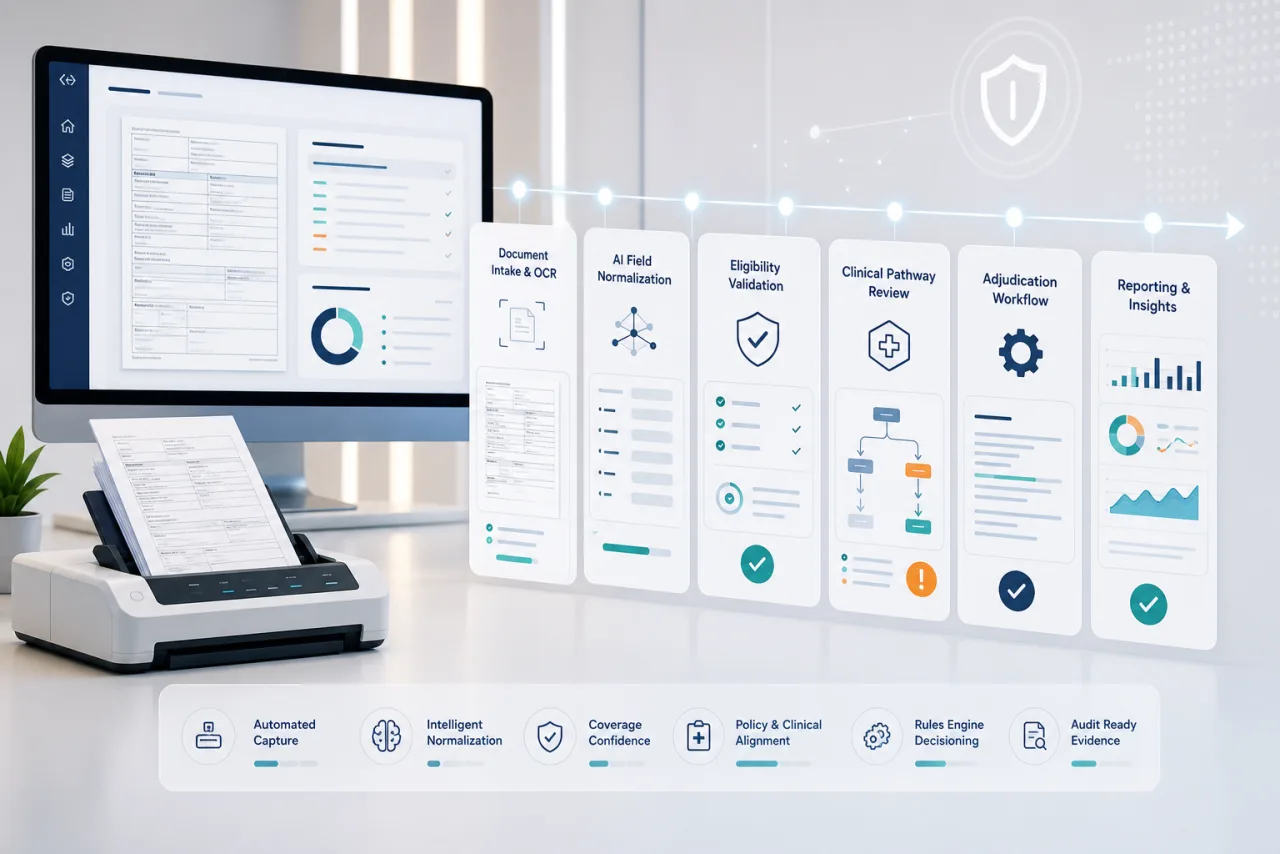
OCR intake, AI-assisted normalization, eligibility validation, clinical pathway review, and payment handoff.
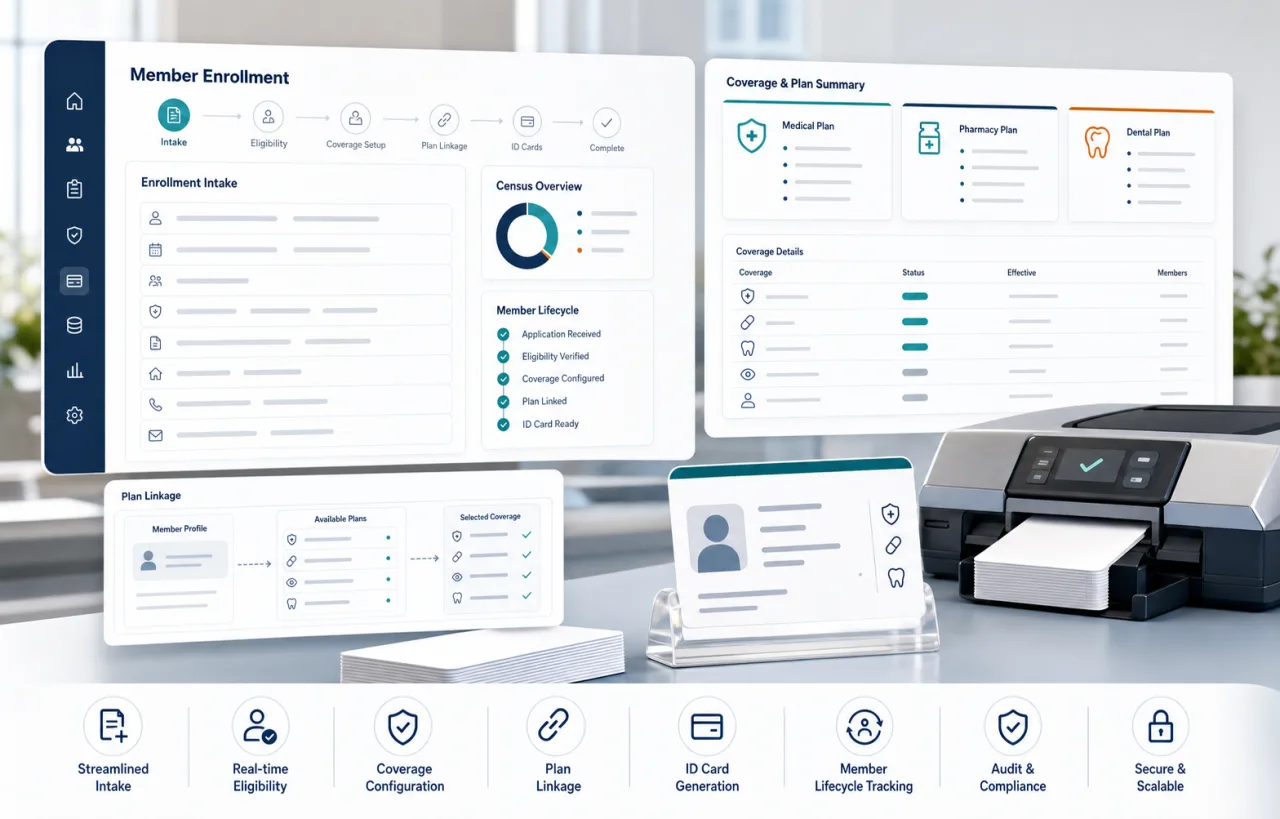
Employer census intake, plan linkage, coverage maintenance, ID-card templates, and bulk generation workflow.
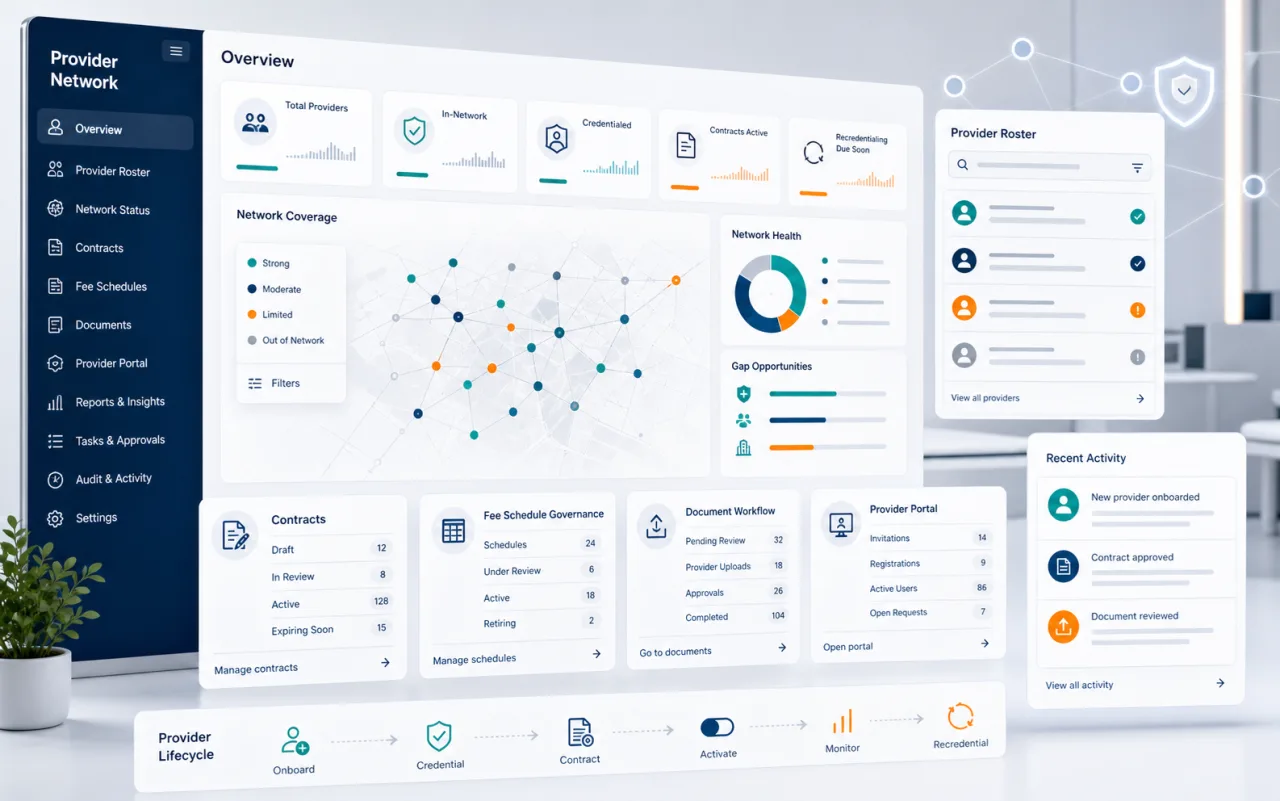
Provider setup, network access, contract visibility, fee schedule governance, and provider portal handoff.
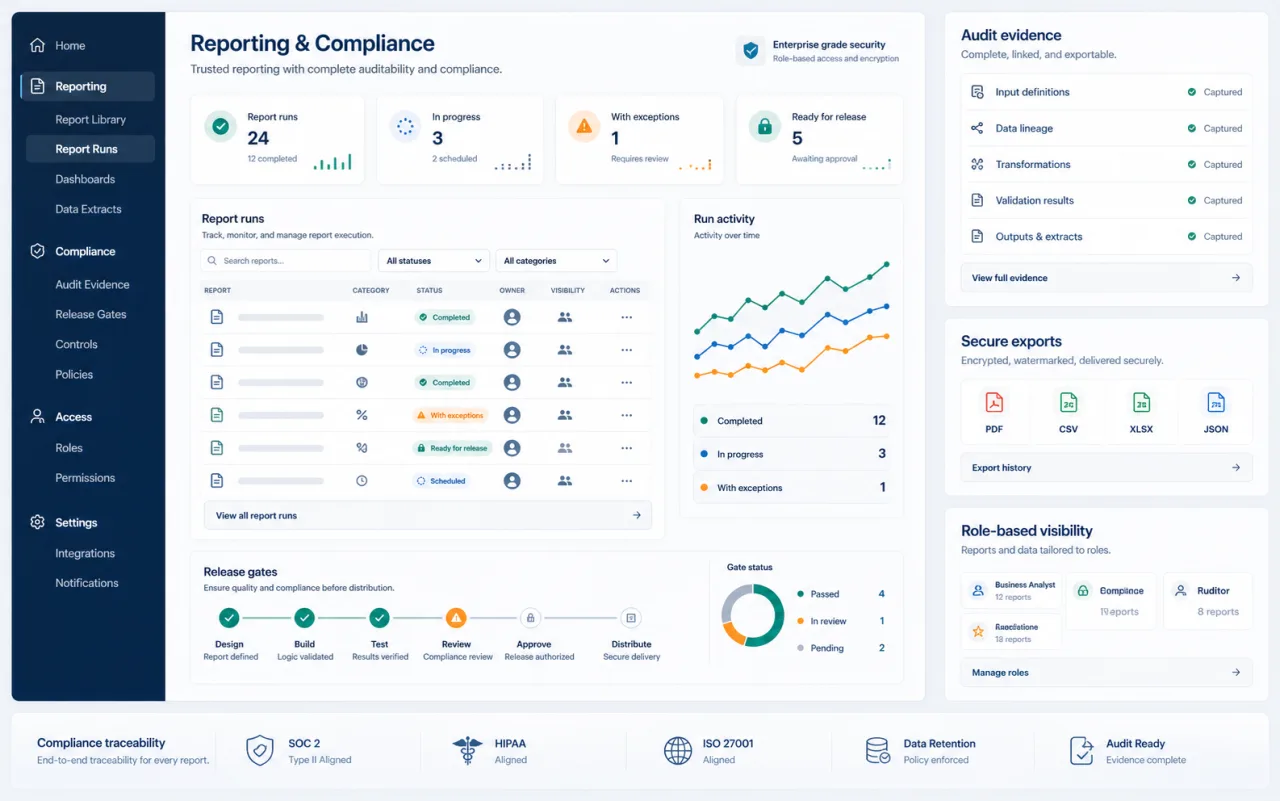
Operational reports, audit evidence, secure exports, role-based visibility, and compliance-ready traceability.